
Easy Miso Soup Recipe – Quick & Delicious Comfort Food
Miso soup recipe is more than just a starter; it’s a warm hug in a bowl, a comforting ritual that transports me straight to the heart of Japan with every savory spoonful. There’s a reason this humble broth is a staple in so many households and a beloved appetizer at Japanese restaurants worldwide. It’s incredibly simple yet profoundly satisfying, boasting a delicate balance of umami-rich dashi and the distinctive, fermented depth of miso paste.
What makes this miso soup recipe so special?
It’s the inherent versatility and the pure, clean flavors that shine through. Whether you’re looking for a light accompaniment to a hearty meal or a soul-soothing solo treat, this miso soup recipe delivers. We’ll explore how to create that perfect dashi base and unlock the nuanced flavors of miso, along with simple additions that can elevate your bowl from everyday to exceptional. Get ready to discover how easy it is to bring this authentic taste of Japan into your own kitchen.

Miso Soup Recipe
There’s something incredibly comforting and restorative about a steaming bowl of miso soup. It’s a staple in Japanese cuisine for a reason: it’s simple to make, packed with umami, and endlessly adaptable. This recipe is my go-to for a quick, wholesome, and deeply satisfying soup that can be enjoyed any time of day. Whether you’re looking for a light starter, a nourishing lunch, or a warm companion to your dinner, this miso soup will not disappoint.
The beauty of miso soup lies in its fundamental ingredients, which, when combined, create a flavor profile that is both complex and delicate. The foundation is dashi, a Japanese broth that forms the soul of many of its dishes. Then comes miso paste, a fermented soybean paste that adds a savory depth and a touch of sweetness depending on the type used. Finally, simple additions like tofu and seaweed bring texture and essential nutrients. Don’t be intimidated by the ingredients; most are readily available in Asian grocery stores or the international aisle of larger supermarkets.
Ingredients:
Cooking Instructions
Getting started with this miso soup recipe is incredibly straightforward. You’ll find that the entire process, from gathering your ingredients to enjoying your first spoonful, takes mere minutes.
1. Prepare the Dashi and Rehydrate the Seaweed
Begin extract by gently heating your dashi in a medium saucepan over medium heat. You don’t want the dashi to come to a rolling boil, just a gentle simmer. While the dashi is warming, place your dried seaweed in a small bowl and cover it with cool water. Let it soak for about 5-10 minutes. As it rehydrates, the seaweed will expand and soften, transforming from a brittle state to a pleasant, tender texture. Once rehydrated, drain any excess water from the seaweed. If the pieces are quite large, you can give them a rough chop to make them more manageable to eat in the soup.
2. Add the Tofu and Seaweed to the Simmering Dashi
Once your dashi is warm and the seaweed is rehydrated, carefully add the pre-cut silken tofu and the drained seaweed to the saucepan. The silken tofu is delicate, so add the pieces gently to avoid breaking them too much. You want them to warm through and absorb the flavors of the dashi without disintegrating completely. Allow these ingredients to simmer gently in the dashi for about 2-3 minutes. This short simmering time is enough to warm the tofu and allow the seaweed to meld with the broth.
3. Dissolve the Miso Paste
This is a crucial step for achieving the perfect miso flavor. Never boil your miso paste, as boiling can destroy its delicate probiotics and alter its nuanced taste. Instead, take a ladleful or two of the warm dashi from the saucepan and place it into a small bowl. Add your miso paste to this warm dashi in the bowl. Use a whisk or chopsticks to gently stir and dissolve the miso paste completely. Continue stirring until there are no lumps and you have a smooth, uniform paste. This technique ensures that the miso is evenly distributed throughout the soup and prevents clumping.
4. Combine the Miso Mixture with the Soup
Once the miso paste is fully dissolved in the dashi, carefully pour this mixture back into the main saucepan with the rest of the dashi, tofu, and seaweed. Stir everything together gently to combine. Now, the soup will begin extract to take on its characteristic cloudy appearance and rich aroma. Continue to heat the soup gently over low heat. Remember, the goal here is to warm the soup through and allow the flavors to meld, not to boil it. A gentle simmer is all that’s needed. You might want to taste the soup at this stage and adjust the amount of miso paste if you prefer it stronger or milder.
5. Serve Hot and Garnish
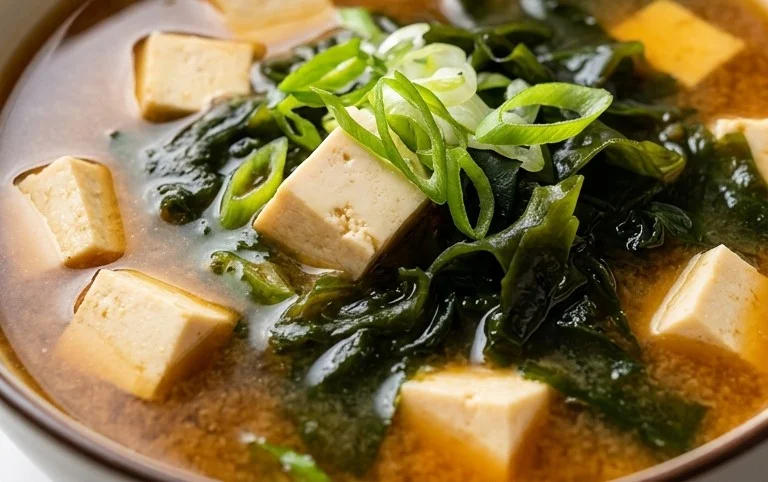
Once the miso soup is heated through and the flavors have had a moment to marry, it’s ready to be served. Ladle the soup carefully into your serving bowls, making sure to distribute the tofu and seaweed evenly. Garnish each bowl with the chopped scallions. The fresh, bright flavor and vibrant green of the scallions add a wonderful finishing touch, both visually and gastronomically. Serve immediately and enjoy the warmth and complex, savory goodness of your homemade miso soup. This simple dish is a testament to how a few high-quality ingredients can create something truly special and satisfying.
Conclusion:
There you have it! Making delicious miso soup from scratch is surprisingly simple and incredibly rewarding. This recipe is fantastic because it allows for a wonderfully customizable and nourishing bowl that’s perfect any time of day. Whether you’re seeking a light starter, a comforting lunch, or a healthy accompaniment to your main meal, this miso soup recipe delivers. We’ve explored how easy it is to adapt, from adding extra vegetables like shiitake mushrooms and spinach to incorporating protein like silken tofu or even cooked chicken. Feel free to experiment and make it your own! I truly encourage you to give this versatile and satisfying miso soup a try. It’s a wonderful way to bring a taste of authentic Japanese flavor into your kitchen.
Frequently Asked Questions:
What is the best miso paste to use for miso soup?
The best miso paste really depends on your preference! For a classic, balanced flavor, white miso (shiro miso) is a great starting point, offering a mild, slightly sweet profile. Red miso (aka miso) provides a richer, more savory, and intense flavor. A blend of white and red miso can offer a lovely depth. Don’t be afraid to try different types to discover your favorite!
Can I make miso soup ahead of time?
You can prepare most of the components of your miso soup ahead of time, such as dashi and your chosen additions (like tofu or vegetables). However, it’s best to add the miso paste just before serving. Miso is a fermented product, and prolonged boiling can diminish its delicate flavor and beneficial probiotics. Gently dissolving it into the hot broth ensures the best taste experience.
Miso Soup
A simple and comforting Japanese miso soup, a staple for any meal.
Ingredients
-
2½ cups Dashi
-
1 heaping tablespoon dried seaweed
-
4 oz silken tofu (cut into small pieces)
-
2-2½ tablespoons miso paste (or to taste)
-
1 tablespoon scallion (chopped)
-
1 teaspoon sesame oil
Instructions
-
Step 1
Rehydrate the dried seaweed in a small bowl with a little warm water for about 5 minutes, then drain. -
Step 2
In a medium saucepan, bring the dashi to a simmer over medium heat. -
Step 3
Add the rehydrated seaweed and silken tofu to the simmering dashi. Cook for 2-3 minutes until heated through. -
Step 4
In a small bowl, whisk the miso paste with a ladleful of the hot dashi until smooth. This prevents lumps. -
Step 5
Gently stir the dissolved miso mixture back into the saucepan. Do not boil after adding miso, as it can affect the flavor and beneficial properties. -
Step 6
Ladle the miso soup into bowls. Drizzle with a little sesame oil and garnish with chopped scallions before serving.
Important Information
Nutrition Facts (Per Serving)
It is important to consider this information as approximate and not to use it as definitive health advice.
Allergy Information
Please check ingredients for potential allergens and consult a health professional if in doubt.